
How Being Called a "Liar" Put Me on Substack's Rising in Business List
What happened when I tried Threads for the first time

If you want more posts like this, where I break down what actually works in marketing and why (numbers and all), subscribe below.
“Hahahahahaha pathetic.”
“Liar.”
“Ok 🤡”
Those were some of the comments on my 7th-ever post on Threads.
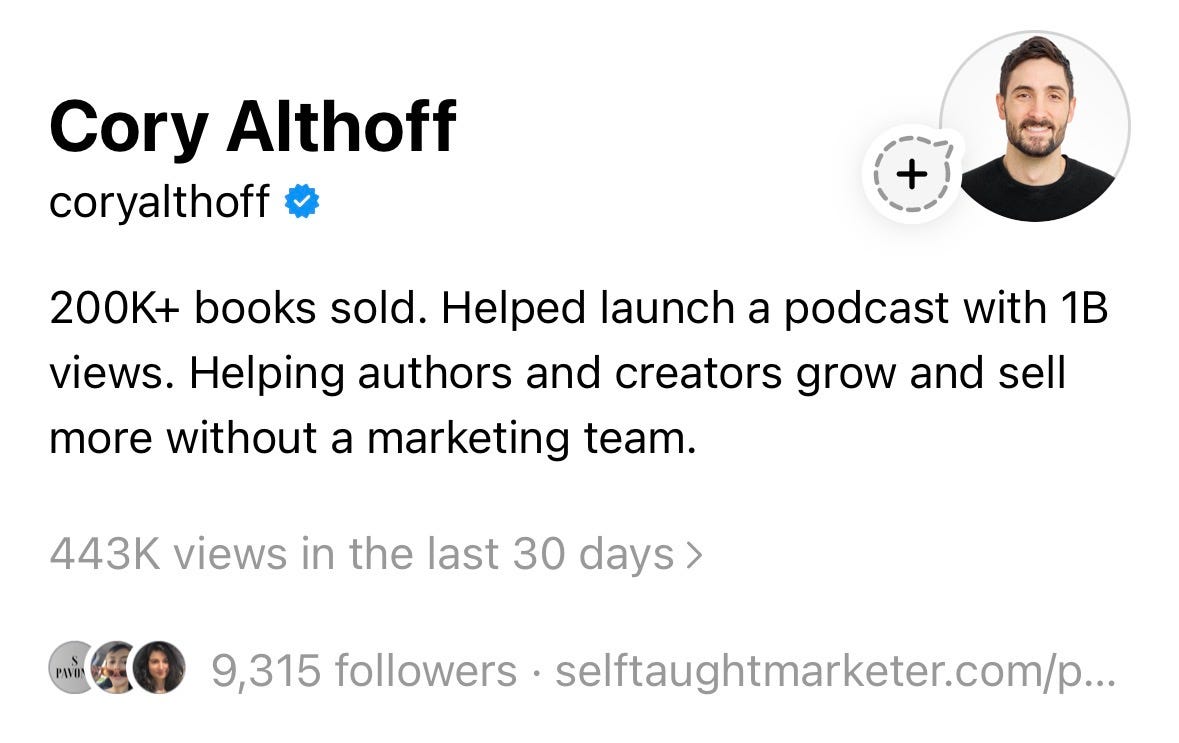
That post got 292,000 views and nearly 3,000 likes. In my first week on Threads, all my posts combined hit 443,000 views.
But here’s what actually mattered.
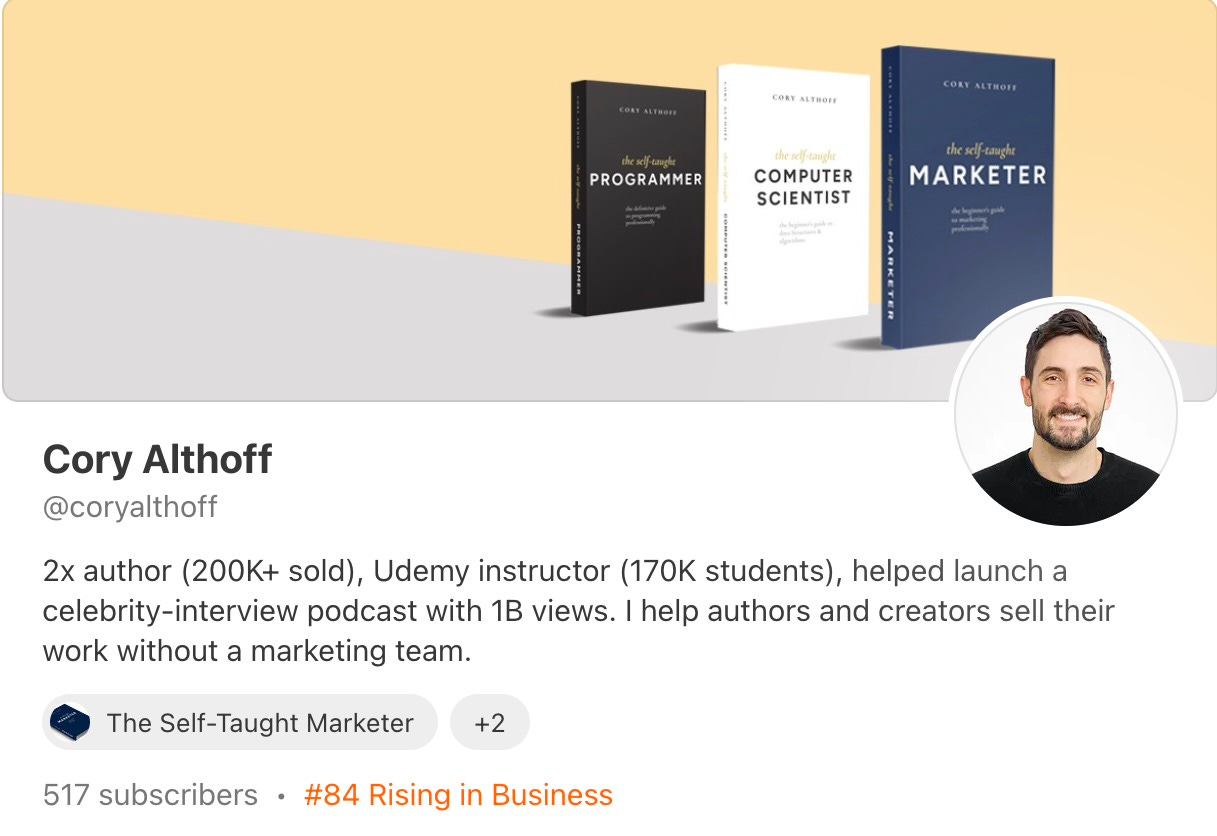
755 people clicked through to my Substack. And a few days later, my less-than-2-month-old Substack hit #84 on the Rising in Business list, driven by new subscribers: 27 free and 1 paid.
All from a post where some people were calling me a liar.
What I Actually Posted
So what was the post that got so much attention?
Here it is.
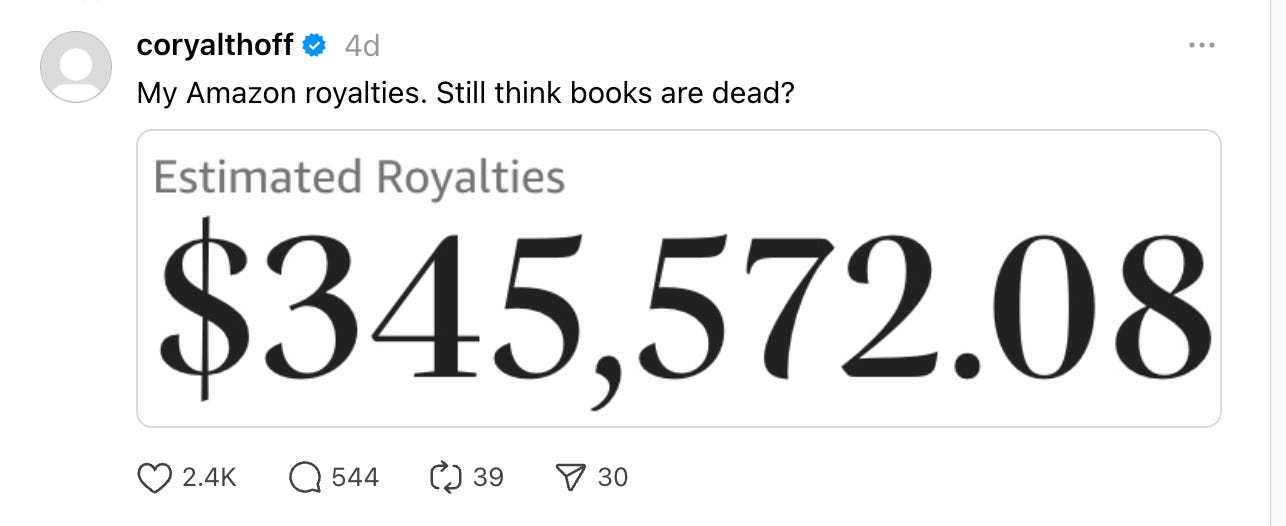
Eight words and a screenshot of my Amazon royalties dashboard showing $345,572.08—just some of the royalties from my first book, The Self-Taught Programmer.
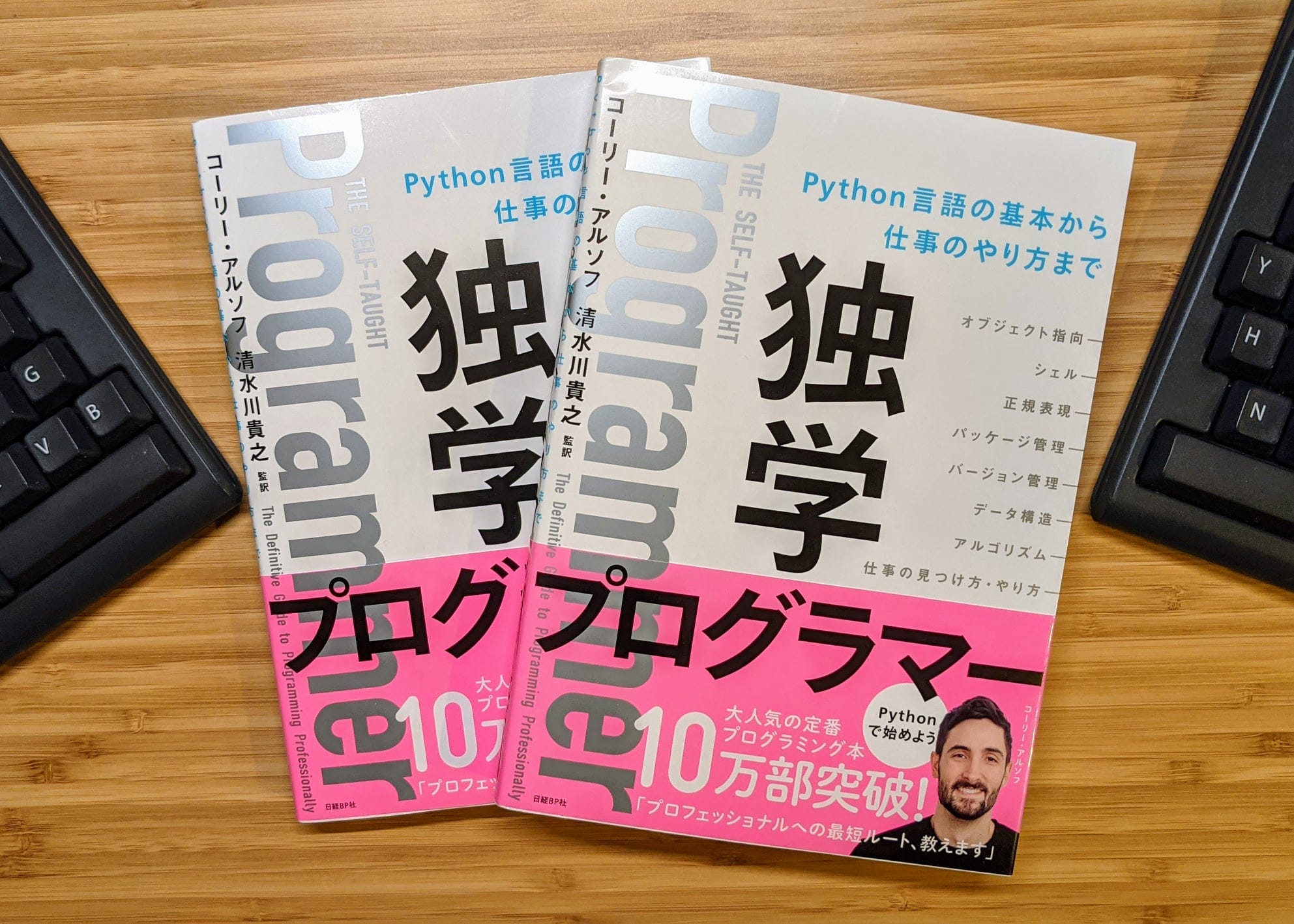
That’s not including sales in other places, like other bookstores, or the 100,000+ copies I sold in Japan.
But on Threads, where every other post is a fake income screenshot from someone selling a course, people assume $345,572.08 is a lie until proven otherwise.
That’s why some people called me a liar.
But the thing is: every angry comment was a signal to the algorithm that the post was working. Every “liar” was someone stopping their scroll to type. Every 🤡 pushed the post in front of more people.
The hostility was part of the distribution engine.
The other 80% of engagement came from people being supportive.
That is the perfect mix.
If nobody has any emotional reaction to your post, nobody will see it.
But if you post something that gets overwhelming hate or condemnation, like fabricated numbers or offensive content, then nobody is going to become your fan.
Most people think of engagement as a measure of approval. It isn’t. The algorithm doesn’t know the difference between someone agreeing with you and someone telling you off. It just knows they stopped scrolling. And the longer they stay, the better the post performs. That means posts that get a reaction out of people, even if that includes hostility and arguing, often perform the best.
And when there is a debate, people want to see who is right. That is why my post worked. People clicked through to my profile to figure out who I was and whether the number was real.
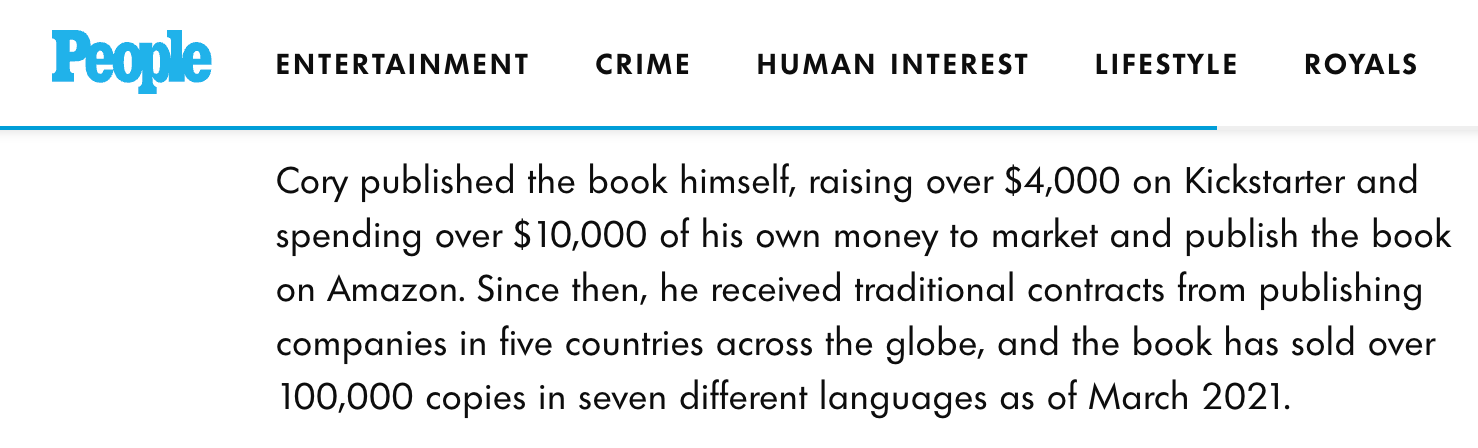
Which is exactly what I wanted them to do, because the link in my bio was an article I wrote about how I got my royalties so high, and how you can do the same with your book.
People vastly overestimate how long anyone remembers hate comments or how much anyone actually cares.
The next day, I posted something else that wasn’t controversial at all.
Not a single hater showed up—and that post did 10x better than anything I’d posted before, riding the engagement from the “outrage” post.
Are You Playing It Too Safe?
You may be thinking, “That sounds risky.”
But I read a lot of posts from people trying to grow their social media followings. Most of them are playing it way too safe.
Half of people are posting stuff clearly written by AI. The other half are posting about the sandwich they ate for lunch.
If you want people to follow you and care about your work, that won’t work. You need personality. And you can’t be afraid to post something that might make people have a strong reaction.
The catch: this only works if what you’re posting is true. Provocation without substance is just clickbait, and it falls apart the moment someone does their research.
And trust me, I know it’s not easy.
There are days I post stuff on social media and get a ton of anxiety.
And I’d be lying if I said being called a liar, for something that’s 100% true, didn’t sting.
One of the people who called me a liar was a fellow author who told me he’s been published by Penguin and a bunch of other publishers. He said his book is on Amazon and has never seen any view that looks like my screenshot.
I congratulated him on his success and told him the reason he hasn’t seen it is because he has a traditional publisher. I self-published, and this is the view you see when you self-publish on Amazon.
His response:
“Enough.”
That triggered me so much I left a petty comment—then composed myself, deleted the comment, and blocked him.
But before you get discouraged or outraged on my behalf, remember that there’s not a person alive who gets attention online and doesn’t get some hate. Not even the pope.
The reason my Threads post worked is because I posted something that triggered a debate.
Most people won’t do that.
Closing Thoughts
Before last week, I had never used Threads.
In my first few days, I got 443K views and 421 new followers across all my posts.
The post that gave me the most momentum brought some hate.
Every single one of the people who posted something rude has probably forgotten about my post by now.
But 755 of the people who saw that post clicked through to my Substack, 27 of them subscribed, one of them paid, and my Substack hit #84 on the Rising in Business list two months in.
That’s the trade.
A few people called me names. Hundreds of people found my work.
I’ll take that trade every time.
If you’re a writer, a creator, or anyone trying to get your work noticed online, stop posting sandwiches.
Be a little more unhinged. Stir up a debate.
The people who matter aren’t the ones leaving clown emojis.
They’re the ones clicking through to see what you’re all about.
Learn more at coryalthoff.com.
Awww Cory this is so amazing!! Proud of you ❤️❤️❤️
You are correct on all fronts. I read those awful comments. And was offended for you. But 2 days later, I had forgotten all about them. I also know that it's risky to put myself out there. (More than I already am.) And I know that putting in the work as a self-published author can net you more than a book deal. If you're not afraid to pound the pavement.