

“Nobody is going to read my book. I should give up.”
That is what I told myself after 6 months of writing my first book full-time.
I was full of self-doubt.
Why was I spending so much time writing this book? Would anyone even read it?
I wasn’t delusional. I knew the odds. 98% of books never sell more than 5,000 copies.
And I didn’t have a publisher, a publicist, or an audience.
That didn’t matter.
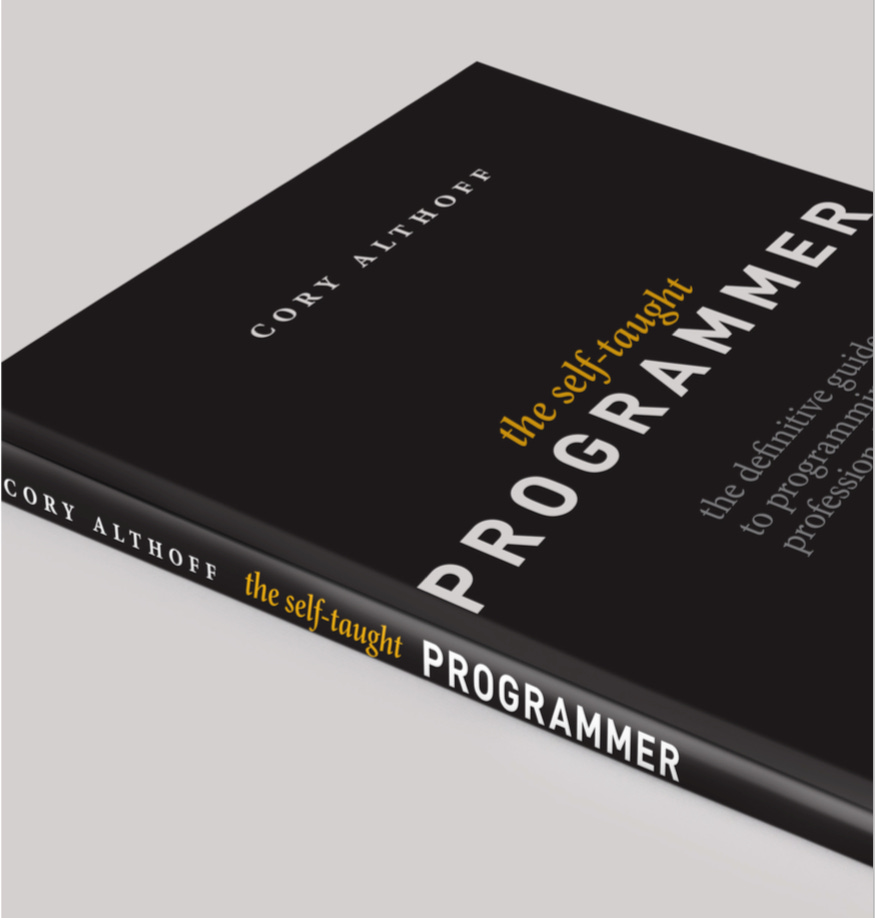
My book, The Self-Taught Programmer, ended up selling over 200K copies in eight languages.
Most people think you need an existing audience to sell your work.
That you need millions of social media followers and a big publisher backing you.
The truth is, you don’t.
Having a publisher can hold you back because they force you to follow their playbook rather than creating your own.
I beat the odds by doing things my own way.
I didn’t rely on a big launch.
I focused on building something that sells every month for years.
First, you build a foundation of reviews. Without some initial social proof, nothing else works.
Then you layer in tactics that drive consistent sales every single month instead of betting everything on a big launch week (that could work, but probably won’t).
Instead, you focus on making progress every month.
And letting everything compound.
If you don’t have an existing audience, a publisher, or a big launch budget, this is the strategy for you.
The Problem with Traditional Advice
Publishers will tell you that selling your book is all about “the launch.”
I disagree.
When I write a new book, my goal is to create a perennial seller through years of effort, not to sell 10K copies in one week with some perfectly executed launch event.
That can work if you already have an audience. But most first-time authors don’t have one.
You are playing a multi-year game.
Act like it.
A Quick Win You Can Do Today
Here is something you can do to start making progress today.
Give your book away for free to friends and family and ask them to write an honest review if they like it.
Don’t try to sell it at first.
I asked friends, family, and people I hadn’t talked to in years if they wanted a free copy of my book.
Reviews are the only thing that matters in the beginning. Nobody buys a book with 3 reviews — but once you hit 25, something shifts.
Amazon’s algorithm starts noticing you.
Readers start trusting you.
And then you start to build momentum.
Next, enroll in Amazon KDP for the Kindle copy of your book and schedule a day to give it away for free.
Use Kindle giveaway sites like manybooks.net to drive traffic to your promotion.
They offer packages that guarantee 500 downloads for $39.
I used sites like these to drive thousands of free downloads for my book.
More people reading my book led to more reviews, which in turn led to more sales.
Find One Place to Grow Organically
While writing The Self-Taught Programmer, I tried all the major social media platforms.
I had a hard time growing on most of them.
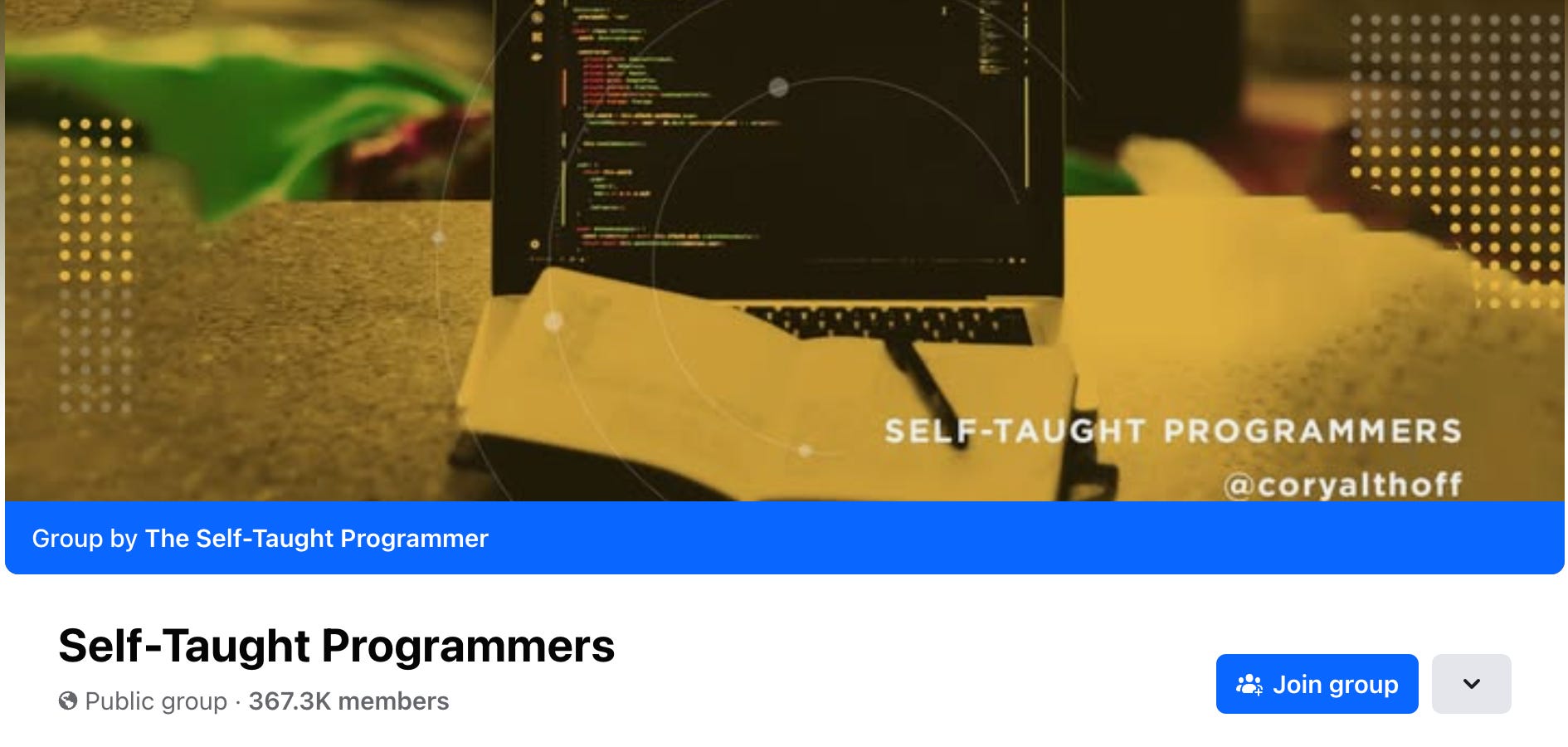
Then I created a Facebook group called Self-Taught Programmers, which eventually grew to 365K members through word of mouth.
I did not anticipate that it would happen, and it started small. It took 5+ years to reach 100,000 members. The group started with just me.
Remember, slow, consistent growth compounds over time.
At first, I had to hustle to get people to join.
But once people saw that I would answer their questions about learning to program, more people joined, and the growth continued.
You need to find one platform where you can grow organically.
That means you need to experiment with many different platforms to find where you can build an audience, give value, and occasionally ask them to buy your book.
It is always easier to grow on a platform when it’s new.
Starting a Facebook group is way harder today than it was then. Because as platforms mature, they throttle organic growth.
But there are plenty of platforms today where organic growth is possible, like Substack, which is where I am focusing on growing to promote my next book.
The important thing is you need to find a strategy and a platform where your audience is growing every month.
Use Giveaways
Every month or two, I also did giveaways on Instagram.
People love giveaways.
It’s one of the only things on social media almost guaranteed to get engagement.
When I was promoting my book, I did a ton of giveaways on Instagram.
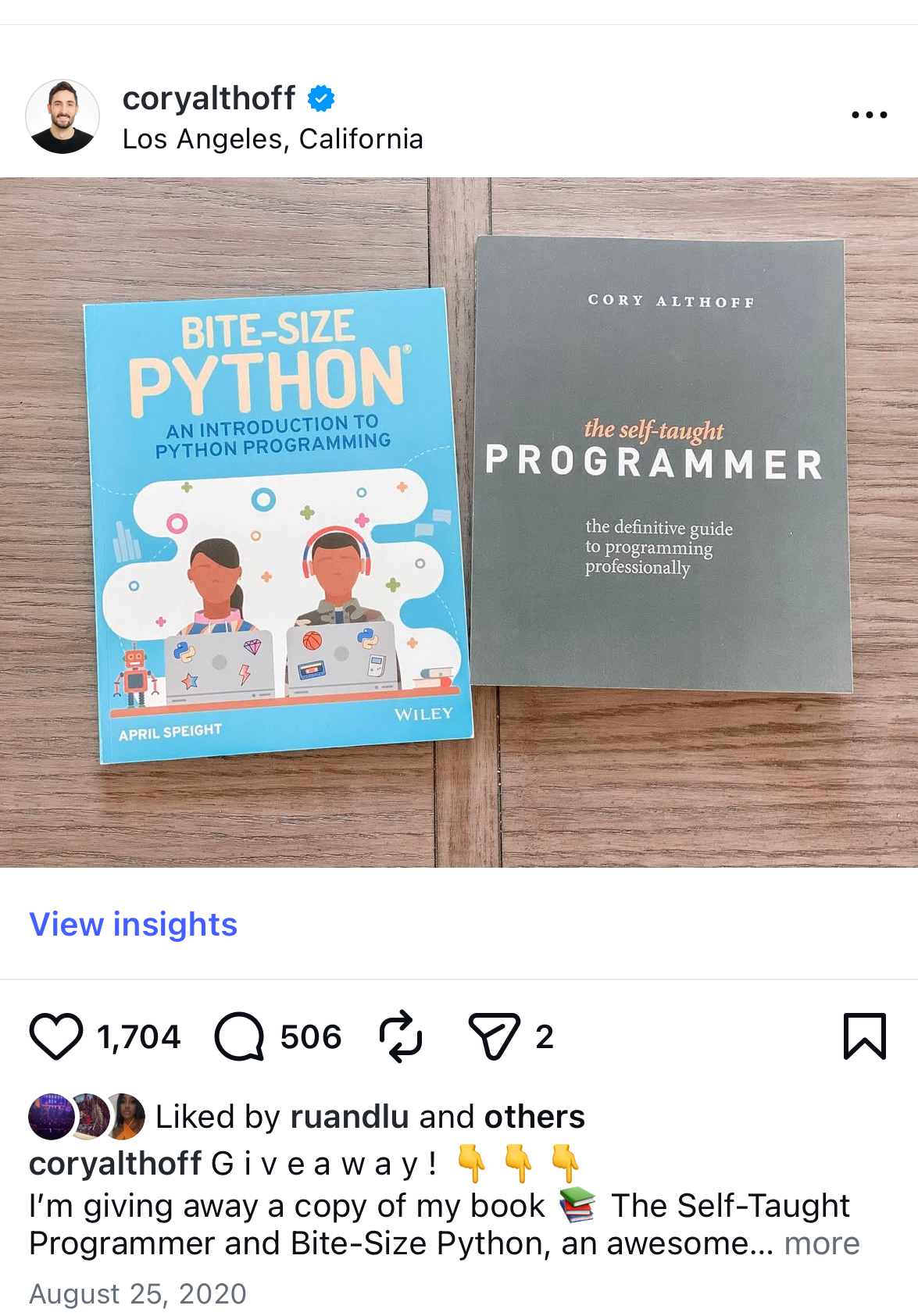
One of them got more than 30,000 likes.
You don’t need to give away crazy prizes to succeed with this.
The giveaway I did was literally offering a free copy of my book.
I’ve done successful giveaways with prizes ranging from my book to my book and a computer.
I recommend starting with your book and two other books similar to yours but better known. You can experiment with including a $50 or $100 cash prize or gift card as well.
The person who won the free copy of your book will most likely write you a positive review if they like your work, and everyone who didn’t win gets exposed to your work, and oftentimes, some percentage will buy a copy.
Get Press
I did not go for press right away.
I waited for nine months before I tried to get any press.
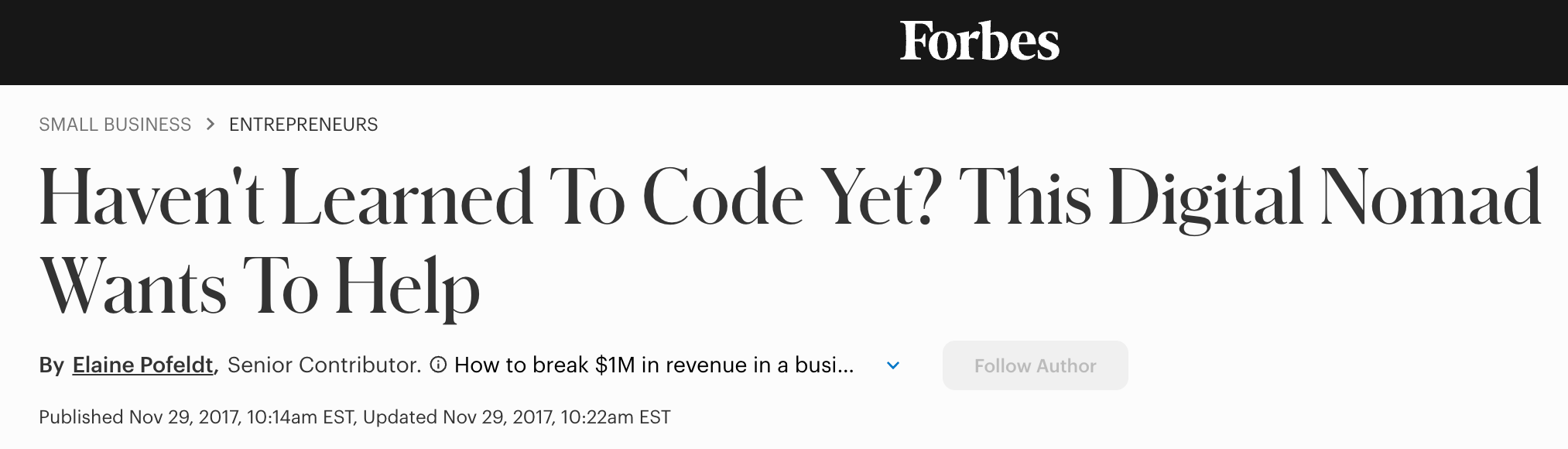
I ended up getting featured in Forbes by hiring a cheap publicist on Upwork.com.
You can also act as your own publicist. All you have to do is send emails to reporters, which isn’t as difficult as you might think.
The article generated a hundred sales.
Not the biggest spike in the world, but when your goal is slow and steady growth, you aren’t focused on huge spikes. Your goal is to move the needle slowly month after month.
Getting featured in the press helps with your book’s credibility.
You can use it elsewhere in your marketing, “as seen in Forbes.”
You can put it on your Amazon page, website, etc.
And if you act as your own press agent, all this credibility and growth is free.
You can also use a service like Help a Reporter Out to get quoted in different publications as an expert.
The platform lets journalists send out quote requests, and you can respond with your quote. If it’s a good match, the journalist may put it in their article.
I did this to get quoted in a few programming articles.
I was even quoted in CNBC.
Give Talks and Go On Podcasts
Eventually, as you continue this strategy, opportunities start coming to you.
It wasn’t part of my initial plan, but because of all the work I was putting in, I ended up getting opportunities like giving the opening keynote Speech at PyCon JP in 2019.
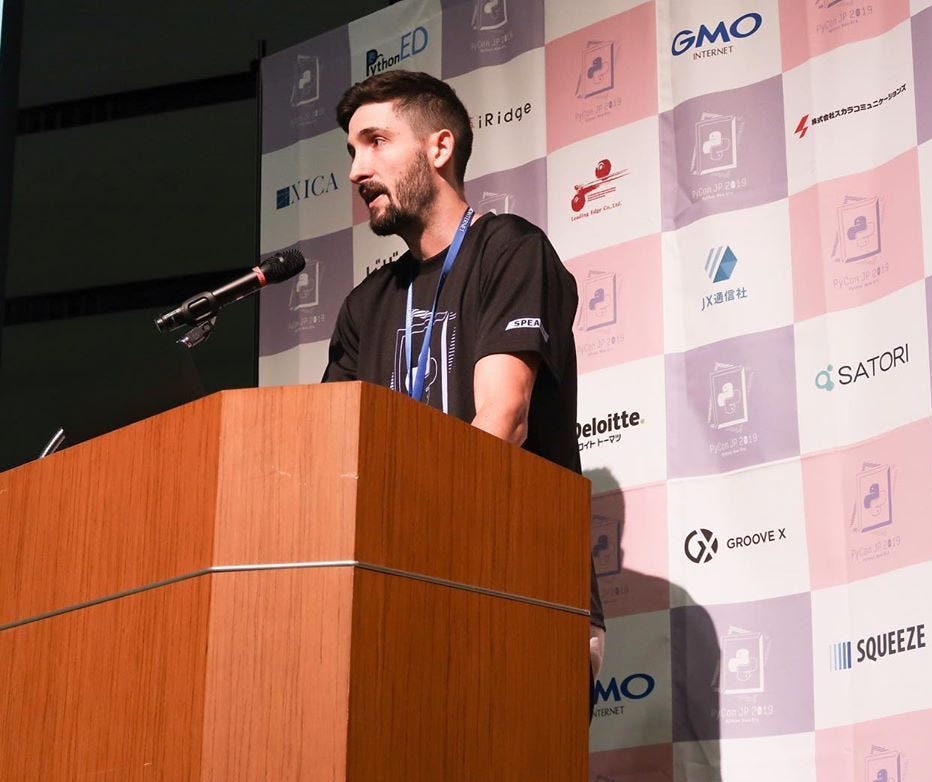
I also got invited to go on the Tom Style Show on YouTube, which ended up getting 681K views.
You don’t have to sit around waiting for opportunities like these to come to you, though.
Every major conference allows you to submit a request for proposal to give a talk.
And you can cold email podcasts with your pitch to get on them.
Boost What’s Working with Cheap Traffic
Once your book is selling consistently, reinvest some of your earnings into paid growth.
When I was promoting The Self-Taught Programmer, I would pay Instagram meme accounts each month to post about my book.
Influencers cost a lot of money.
But meme accounts are cheap.
I would literally spend $40 to have a programming meme account with a million followers shout out my book.
The ROI was insane.
Your Turn
Most people overestimate what they can do in one year and underestimate what they can do in ten.
You do not need to pray for your book to go viral with a perfectly executed book launch.
Instead, focus on making incremental progress year after year over a long-term horizon.
Ask your friends, family, and everyone you’ve ever met who may be interested in your book if they would like a free copy.
Build a social media following one day at a time, ideally on a new platform where you can grow organically.
Focus on leading with value, but don’t forget to also ask people to buy your book.
Run giveaways. Pitch reporters. Pay meme accounts $40 to reach a million followers. Submit talks to conferences. Cold email podcast hosts.
Everyone wants to rely on viral growth. But viral growth is luck. This is a system. I know which one I’d bet on.
Selling tens or hundreds of thousands of copies of your book over the years may not seem as glamorous, but it is a path forward that will work if you show up every day.
Every great book starts with zero sales.
Mine did too. I spent months asking everyone I knew if they wanted a free copy.
It didn’t feel like a strategy.
It felt like begging.
But it got me to 25 reviews and eventually over 2,000.
It was not glamorous. Building an audience never is. That is what nobody tells you.
But when you are sitting on hundreds of thousands of copies sold, you won’t care how unglamorous it felt at the beginning.
I’m going through the whole process again with my new book, The Self-Taught Marketer. Subscribe, and I’ll show you exactly what works this time.
Learn more at coryalthoff.com.
Excellent article! 👏🏻👏🏻👏🏻👏🏻👏🏻
If I had continued doing even some of these things, my memoir would be widely known by now. But somewhere along the way I stopped. Compounding works. Whether you deal in money or books, it's the same principle.
This article gives me hope. Thank you!